
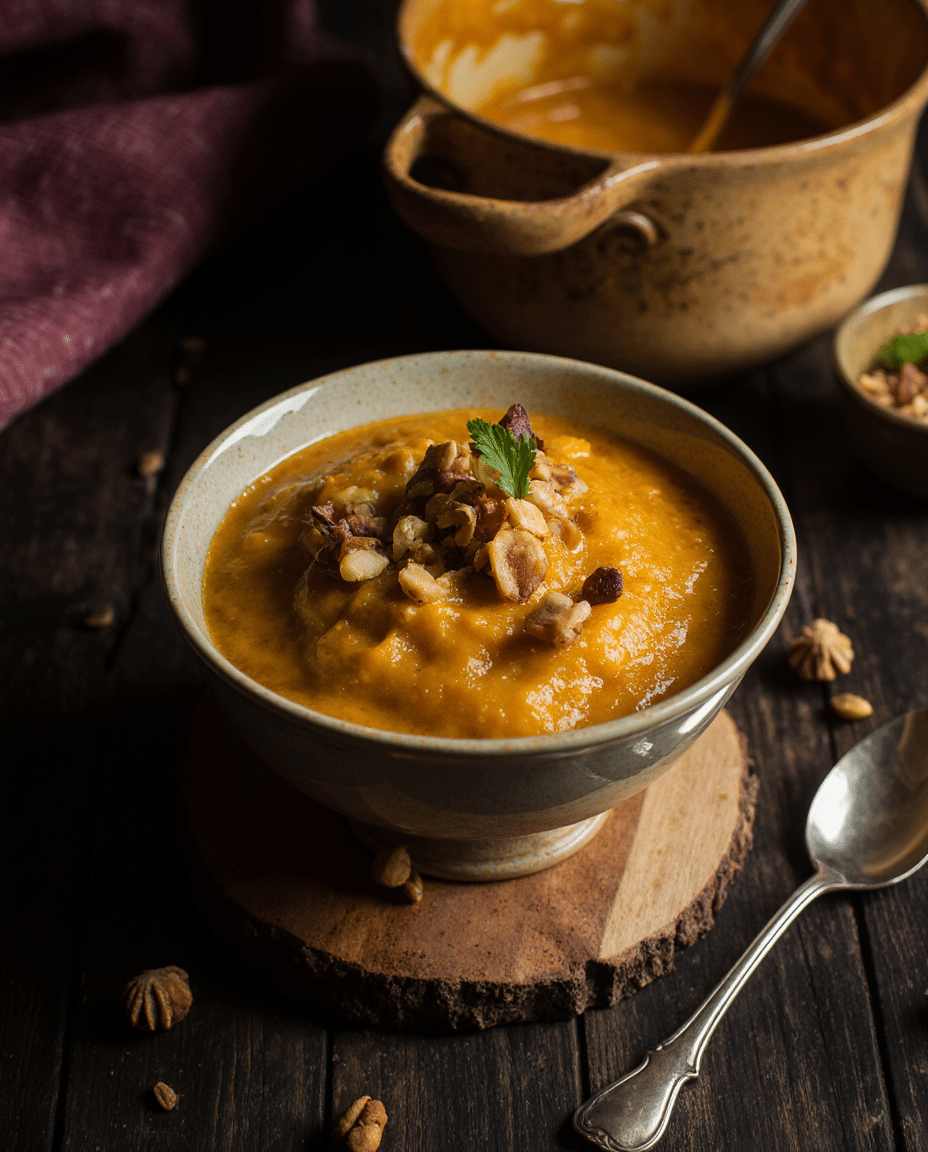
Badam Halwa is a luxurious Indian dessert made from ground almonds, ghee, milk, and sugar, flavored with saffron and cardamom. Traditionally served during festivals and special occasions, this rich halwa boasts a melt-in-the-mouth texture and a deep, nutty flavor that makes it truly indulgent. A small portion goes a long way due to its richness, and it’s best enjoyed warm with a garnish of slivered almonds or pistachios.
FULL RECIPE
Ingredients
- 1 cup almonds (badam)
- ¾ cup sugar
- ½ cup ghee (clarified butter)
- 1 cup full-fat milk
- ¼ teaspoon cardamom powder
- A few strands of saffron
- 2 tablespoons warm milk (for soaking saffron)
- 2 tablespoons chopped almonds or pistachios (for garnish)
Directions
- Soak Almonds: Soak almonds in hot water for 1–2 hours. Peel the skin off each almond.
- Grind Almonds: Blend the peeled almonds with 1 cup milk to make a smooth, slightly coarse paste. Do not add extra water.
- Soak Saffron: In a small bowl, soak saffron strands in 2 tablespoons of warm milk and set aside.
- Cook Paste: In a heavy-bottomed non-stick pan, heat 2 tablespoons of ghee. Add the almond paste and cook on low-medium heat for 10–12 minutes, stirring continuously to avoid sticking.
- Add Sugar and Saffron Milk: Stir in the sugar and soaked saffron milk. The mixture will loosen at first, then start thickening again.
- Incorporate Ghee Gradually: Add the remaining ghee in small batches, allowing the halwa to absorb it before adding more. Continue stirring.
- Flavor: Once the halwa starts to leave the sides of the pan and turns glossy, add cardamom powder and mix well.
- Serve: Remove from heat. Serve warm, garnished with chopped almonds or pistachios.
Nutrition Facts
- Calories: 320 kcal
- Protein: 6g
- Total Fat: 22g
- Saturated Fat: 10g
- Carbohydrates: 26g
- Sugars: 23g
- Fiber: 2g
- Sodium: 10mg
- Cholesterol: 25mg
Cultural Significance of Badam Halwa
Badam Halwa holds a special place in Indian culinary traditions, especially during festivals like Diwali, Navratri, and Holi. It is often made as a celebratory offering during weddings, religious ceremonies, or housewarming events. The use of rich ingredients like almonds, ghee, and saffron reflects prosperity and hospitality, making it a symbol of auspicious occasions. Offering Badam Halwa to guests or deities is considered a gesture of respect and generosity, deeply rooted in South Indian and North Indian customs alike.
Nutritional Highlights
While Badam Halwa is considered an indulgent dessert, it also offers certain nutritional benefits due to its base ingredient: almonds. Almonds are packed with healthy fats, vitamin E, magnesium, and protein. They support heart health and skin health and help regulate blood sugar when consumed moderately. Milk adds calcium and protein, while cardamom contributes antioxidant properties. However, due to the high levels of ghee and sugar, portion control is key for those watching their calorie intake.
Texture and Flavor Profile
The hallmark of a well-made Badam Halwa is its smooth, melt-in-the-mouth texture with a light granular resistance from the almond paste. Unlike flour-based halwas, Badam Halwa feels luxurious and dense. The ghee gives it a glossy sheen and a rich mouthfeel, while saffron adds a subtle floral aroma and golden hue. The warm, spicy-sweet scent of cardamom enhances the overall experience, making each spoonful a multi-layered treat. When eaten warm, the halwa becomes even more aromatic and comforting.
Tips for Perfect Consistency
Achieving the right consistency in Badam Halwa requires patience and attention to heat control. Cooking the almond paste on low to medium heat prevents it from burning or clumping. Adding ghee gradually, rather than all at once, allows the mixture to absorb the fat evenly and helps develop the halwa’s signature shine. Constant stirring is necessary to avoid sticking and to ensure the paste is evenly cooked. The halwa is ready when it starts leaving the sides of the pan and forms a cohesive mass.
Ingredient Substitutions and Adaptations
While traditional recipes call for full-fat milk and ghee, modern adaptations can cater to various dietary needs. For a vegan version, dairy milk can be replaced with almond milk or oat milk, and ghee can be swapped for plant-based ghee or neutral oil, although the flavor will differ slightly. Those reducing sugar intake may use jaggery or natural sweeteners like stevia in controlled amounts. The richness of the dessert makes it forgiving of minor tweaks, provided the almond paste remains the star of the dish.
Creative Flavor Variations
Though classic Badam Halwa is flavored with cardamom and saffron, there’s room to explore other tastes. Adding rose water lends a delicate floral note, while orange zest or a splash of orange blossom water offers a Mediterranean twist. For a chocolate version, a tablespoon of cocoa powder can be added during the final stages of cooking. Pistachios or cashews may replace almonds for a different nutty base, and a mix of dry fruits can be folded in for added texture and visual appeal.
Serving Suggestions
Badam Halwa is best served warm, either on its own or as part of a festive thali (platter). It can be garnished with slivered almonds, pistachios, or edible silver leaf for an elegant presentation. A scoop of halwa served alongside vanilla ice cream or rabri creates a decadent fusion dessert. For individual portions, it can be poured into small bowls or ramekins and topped with a pinch of saffron strands. During winter months, a hot bowl of Badam Halwa makes for a soul-satisfying dessert.
Pairing Ideas
This rich dessert pairs wonderfully with mildly flavored accompaniments that won’t overshadow its nuttiness. A cup of masala chai or spiced milk is a classic beverage pairing. For a fuller meal, serve Badam Halwa after a light Indian dinner such as vegetable pulao or dal with phulka roti. In festive spreads, it pairs well with savory snacks like samosas or pakoras, balancing out the spice with sweetness. In some households, Badam Halwa is even served alongside puris for a traditional breakfast treat.
Storage and Reheating Tips
Badam Halwa can be made ahead of time and stored in an airtight container in the refrigerator for up to a week. Its high fat and low moisture content make it shelf-stable for several days, especially in cooler climates. When refrigerated, the halwa tends to firm up, but it softens quickly upon reheating. To reheat, warm it gently on the stovetop or in a microwave with a splash of milk or ghee to restore its softness and shine. Freezing is possible but may slightly alter its texture.
Advertisement
Make-Ahead and Gifting Potential
Because of its rich texture and long shelf life, Badam Halwa is an excellent candidate for edible gifting. It can be poured into small decorative jars or boxes and tied with ribbons for festive gifts. You can also mold it into squares or balls for a fudge-like appearance. For make-ahead preparation during busy festive seasons, the almond paste can be made in advance and stored frozen, ready to be cooked and sweetened when needed. This makes it an efficient dessert option with high presentation value.
Conclusion
Badam Halwa is more than just a dessert it’s a rich culinary tradition passed down through generations and cherished across India. Whether prepared for festivals, special family meals, or as a personal indulgence, its comforting warmth and rich almond essence make it a timeless favorite. Its ability to be adapted, paired, and presented in multiple ways ensures it fits effortlessly into modern kitchens while still honoring its classic roots.